
Cannabis Terpene: The Complete Guide to Types, Effects, and How They Work
If you’ve ever picked up a cannabis flower and noticed a sharp lemon smell, a sweet floral note, or a deep earthy aroma, you were interacting with terpenes. These aromatic compounds help shape the scent, flavor, and overall experience of every strain. They’re a key reason two products with the same THC level can feel completely different.
In the next section, you’ll see the term cannabis terpene used in context so you can understand exactly what it means, why it matters, and how it works alongside cannabinoids to influence your experience.
What Are Cannabis Terpenes?
Terpenes in weed are natural aromatic compounds found in many plants, from citrus fruits to pine trees to lavender. A cannabis terpene is simply a terpene produced by the cannabis plant. These compounds help create the distinct smell and flavor of each strain, and they may also contribute to the experience a consumer feels.
Terpenes are produced in the plant’s resin glands (trichomes), right alongside cannabinoids like THC and CBD. Together, these compounds help define the character of a product far beyond THC percentage alone.
How Cannabis Terpenes Work in the Body
1. Aroma and Sensory Signals
When you inhale cannabis, your body responds to the aroma immediately. Different scents can influence mood or alertness simply through the olfactory system- the same way essential oils or natural scents affect people.
2. Interaction With Biological Pathways
While research is still developing, some terpenes appear to influence how cannabinoids interact with the body. A few may bind to certain receptors or alter how your system responds to THC or CBD. This is one reason two strains with similar cannabinoid content may produce different experiences.
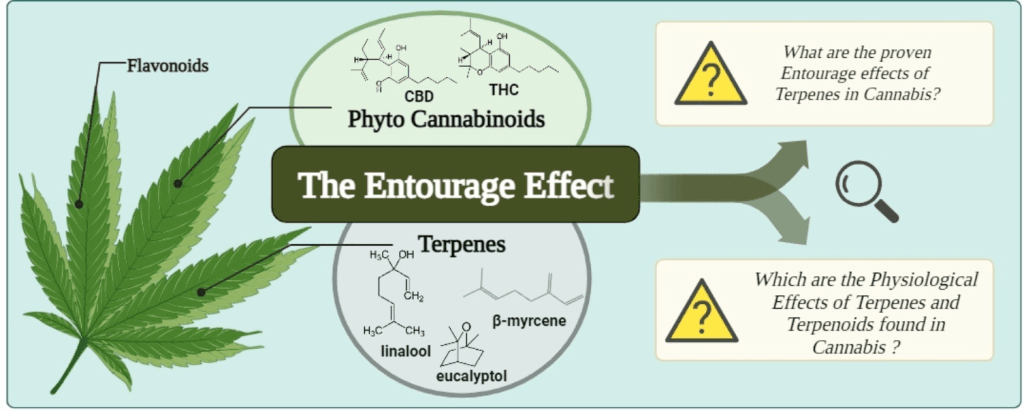
3. The “Entourage Effect”
This term describes how terpenes, cannabinoids, and other plant compounds may work together rather than individually. Although still a theory, many consumers and professionals see terpene profiles as a key part of why strains feel unique.
4. Individual Variation
Body chemistry, tolerance, product format, and even mindset can all influence how a terpene profile feels to any given person.
Most Common Cannabis Terpenes and Their General Profiles
Below are some of the most recognized terpenes in cannabis and the characteristics often associated with them. These descriptions reflect common user reports, not medical claims.
Myrcene
- Aroma: Earthy, herbal, musky
- Common associations: Calm, relaxation
- Also found in: Lemongrass, hops
Limonene
- Aroma: Citrus, bright, zesty
- Common associations: Uplifted mood, clarity
- Also found in: Lemon and orange rinds
Pinene
- Aroma: Pine needles, fresh forest
- Common associations: Alertness, focus
- Also found in: Pine trees, basil
Linalool
- Aroma: Floral, lavender-like
- Common associations: Soothing, calming
- Also found in: Lavender
Caryophyllene
- Aroma: Peppery, spicy, woody
- Unique trait: Known to interact with CB2 receptors
- Also found in: Black pepper, cloves
Humulene
- Aroma: Earthy, woody
- Common associations: Grounding, balanced
- Also found in: Hops
These descriptions help guide expectations, but experience will always vary between individuals.
What Cannabis Terpene Profiles Can Tell You
A strain’s terpene profile can give clues about how it may feel, smell, or be best used. Many consumers find it helpful to match terpene patterns to their goals:
- Uplifting Profiles: Often rich in limonene or pinene
- Relaxing Profiles: Frequently dominated by myrcene or linalool
- Balanced or Centered Profiles: Caryophyllene or humulene mixtures
- Creative or Focused Profiles: Pinene- or limonene-forward blends
These are not guarantees or medical predictions, just common observations from users and growers.
How Terpenes Change During Growing, Curing, and Storage
Genetics & Cultivation
Genetics determine which terpenes a plant can produce, while growing conditions such as light, nutrients, and stress influence how much it produces.
Drying & Curing
Improper drying or curing can cause terpene loss. Over-drying especially reduces aroma and can flatten a strain’s character.
Storage
Heat, light, and oxygen degrade terpenes over time. Fresh, well-stored products offer the most accurate terpene experience.
How to Read Cannabis Terpene Lab Results
A good lab report (or Certificate of Analysis) typically lists:
- Dominant terpenes: usually the top two or three
- Percentages: higher percentages often mean stronger aroma
- Overall terpene content: total terpene percentage can shape experience
A product with a clear terpene breakdown often provides more predictability than one simply marketed by strain name.
How to Choose Cannabis Based on Terpenes
Consumers often choose terpene profiles based on personal preference and desired experiences. Here are general guidelines people use:
- For unwinding after the day: Myrcene-rich or linalool-forward
- For daytime activities: Limonene or pinene blends
- For tension or body relaxation: Caryophyllene-led profiles
- For creative or social moments: Balanced limonene/pinene mixes
Again, these are not medical claims, just widely shared user preferences.
Terpenes in Different Cannabis Products
Flower
Naturally preserves the broadest terpene spectrum when freshly cured.
Live Resin & Rosin
Extracted using methods that aim to retain more of the plant’s original terpene content.
Vape Cartridges
Effects depend heavily on how the oil was processed and at what temperature it’s vaporized, high heat can damage fragile terpenes.
Edibles
Many terpenes evaporate during cooking, so aroma and flavor may not reflect the original flower.
Are Cannabis Terpenes Safe?
In general, terpenes are widely used in food, fragrance, and essential oils. The amounts naturally present in cannabis products are typically low. However:
- Some individuals may be sensitive to strong aromas
- Everyone responds differently
- Quality matters, always choose lab-tested products when possible
If using cannabis for health-related reasons, it’s wise to speak with a qualified professional.
Final Thoughts
Understanding terpenes gives you a powerful way to choose cannabis based on what truly matters: the plant’s chemistry, not just its name or THC number. By learning which aromas and profiles match your preferences, you can make more consistent, enjoyable choices, and discover strains that fit your lifestyle naturally.